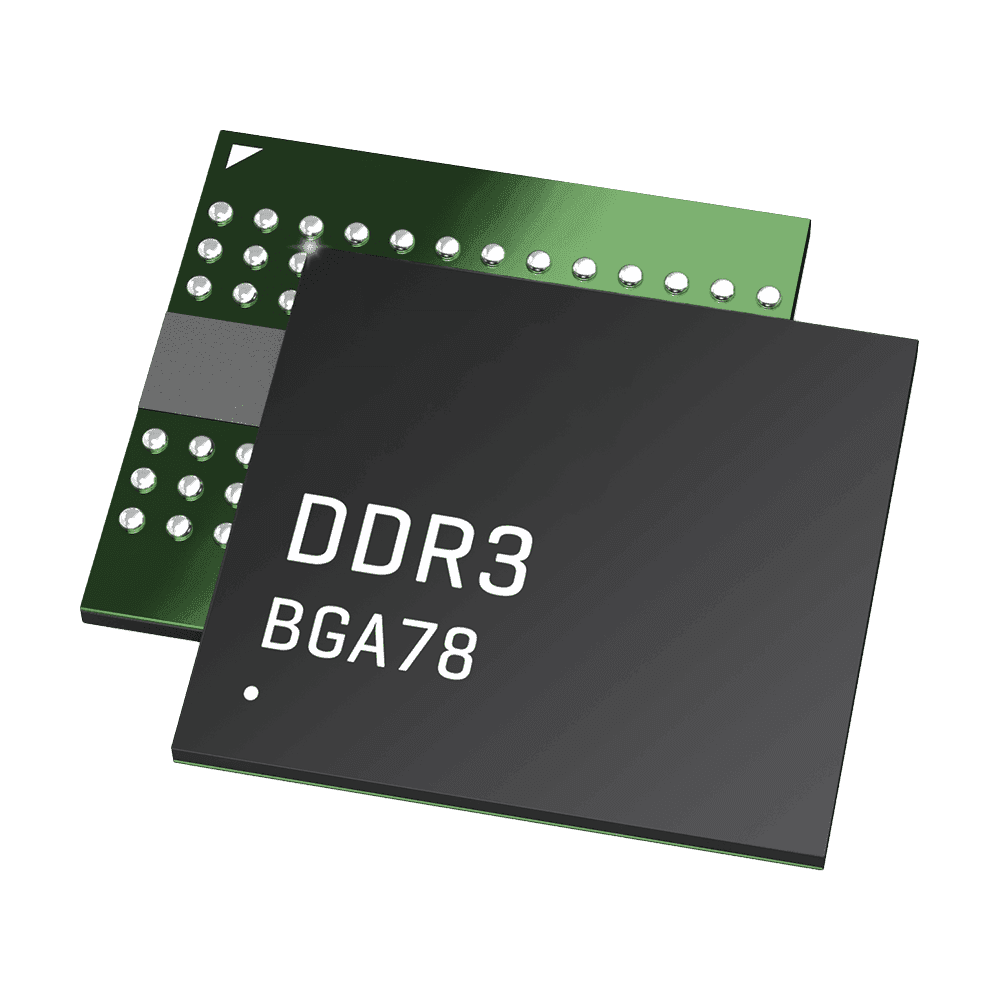
Released to the market in 2014, DDR4 is a high-performance memory designed for large-scale workloads at higher speeds. No wonder it has become an essential component in embedded and industrial designs. And even though the major memory manufacturers withdraw from DDR4, it will remain a relevant technology in many industry applications.
DDR4 differs from previous DRAM generations in several important ways:
Unlike previous generations of DDR memory, prefetch has not been increased above the 8n used in DDR3. The basic burst size is eight 64-bit words, and higher bandwidths are achieved by sending more read/write commands per second.
It’s important to note that DDR4 is not compatible with any earlier type of RAM due to different signaling voltage and physical interface, and reduced power consumption.
We offer DDR4 components from Intelligent Memory, NANYA, Samsung, Sk hynix, and Winbond. However, Samsung and SK Hynix have announced that they will phase out certain DDR4 products.
Reach out if you are looking for alternatives!
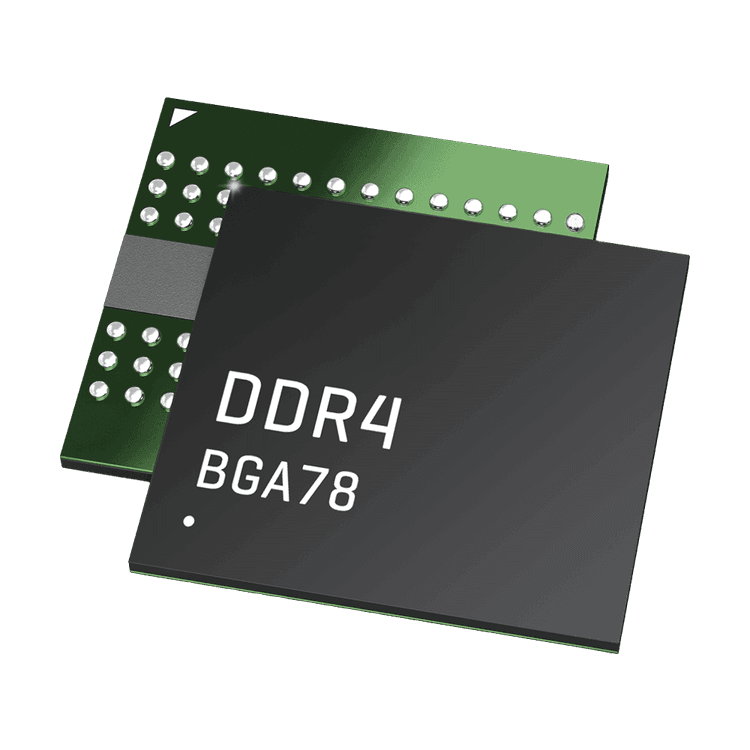
• Increased Bandwidth up to 3,200 Mbps
• 25% less power consumption
• Lower latency for improved multitasking
• Enhanced Error Detection and Correction









| Features | DDR3 | DDR4 |
|---|---|---|
| Speed | 1066 MHz | 1600 MHz |
| Data Rate | 2133 MT/s | 3200 MT/s |
| Voltage | 1.5V/1.35V | 1.2V |
| Typical Densities | 1/2/4/8 Gb | 4/8/16 Gb |
| Banks | 8 | 16 |
Yes, if your platform supports it. DDR4 gives higher bandwidth, lower power, and larger module sizes. You’ll notice gains in multitasking, memory-heavy apps, and power-sensitive systems. If you’re locked to a legacy CPU/board, stay on DDR3 until you upgrade the platform.
Yes, DDR4 is suitable for harsh industrial environments when using industrial-grade modules, which are designed to operate under wide temperature ranges and offer reliable performance in rugged conditions.
DDR4 has long-tail availability through ~2030 and beyond, even as DDR5 grows, primarily by suppliers with industrial longevity programs.
Conclusion: DDR4’s future lies with suppliers explicitly committed to industrial support, not opportunistic die resales.
Suppliers like Intelligent Memory and Winbond are committing to long-term support for DDR4 16 Gb and 32 Gb in both x8 and x16.
Conclusion: For sourcing security, prioritize x8 devices and plan for stacked/aggregated solutions at higher densities.
Risks of staying with DDR4 too long:
Opportunities of migrating early:
Conclusion: Migrating early to DDR5 reduces supply-chain risk, ensures access to cutting-edge SoCs, and positions designs for scalability into the 2030s.
Reach out. We are happy to help!