DDR3 Modules for Professional Applications
DDR3 was officially launched in 2007 and has been used ever since. The actual DRAM arrays that store the data are similar to earlier DRAM types, with similar performance. However, the primary benefit of DD3 over its immediate predecessor DDR2 is its ability to transfer data at twice the rate, enabling higher bandwidth or peak data rates.
DDR3 supports data rates of 800 to 2133 Mb/s with clock frequencies of 400 to 1066 MHz effectively doubling the speeds of DDR2. DDR3 standard 1.5V and 1.35V operating voltages reduce power consumption by up to 30% compared to DDR2.
The DDR3 standard permits DRAM chip capacities of up to 8 Gbit (so 1 gigabyte by DRAM chip), and up to four ranks of 64 Gbit each for a total maximum of 16GB per DDR3 DIMM.
We offer DDR3 modules from the following memory manufacturers:
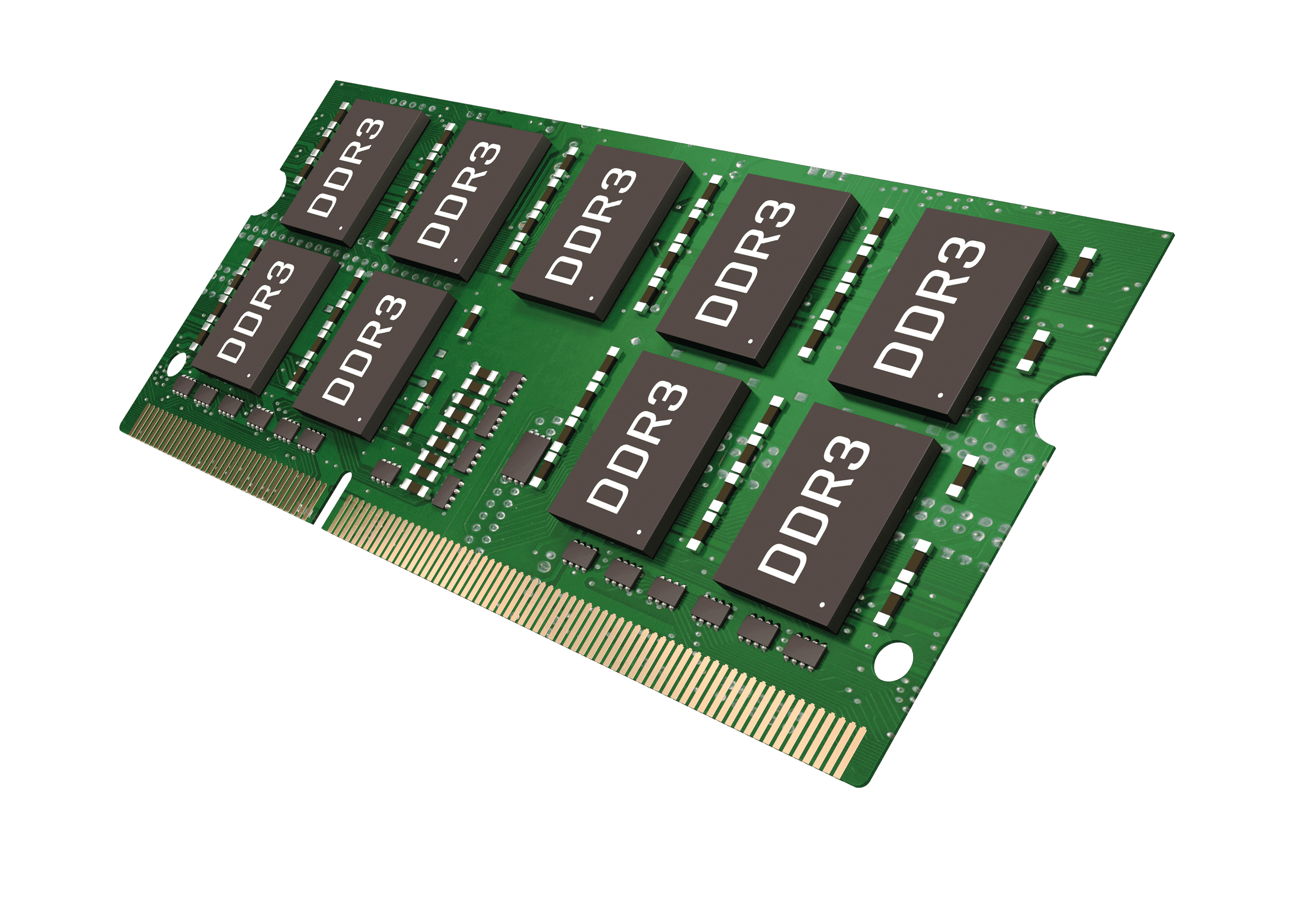






Key features:
| Form Factor | Bit-Width | PinCount | Hight Options | Organisation | Ranks | Capacity |
|---|---|---|---|---|---|---|
| SO-DIMM | x64 | 204 | Standard, ULP | x8, x16 | 1, 2 | 16GB |
| ECC SO-DIMM | x72 | 204 | Standard, ULP | x8, x16 | 1, 2 | 16GB |
| UDIMM | x64 | 240 | Standard | x8, x16 | 1, 2 | 16GB |
| ECC UDIMM | x72 | 240 | Standard, VLP | x8 | 1, 2 | 16GB |
| RDIMM | x72 | 240 | Standard, VLP, ULP | x4, x8 | 1, 2, 4 | 32GB |
| LRDIMM | x72 | 240 | Standard | x4, x8 | 2,4 | 32GB |
| Mini-UDIMM | x72 | 244 | Standard, ULP | x8 | 1, 2 | 8GB |
| Mini-RDIMM | x72 | 244 | Standard, VLP | x8 | 1, 2 | 16GB |
| SO-RDIMM | x72 | 204 | Standard | x8 | 1,2 | 16GB |
| Micro-UDIMM | x72 | 214 | Standard | x16 | 1 | 2GB |