Efficient DDR4 Modules for Embedded Systems
DDR4 was released to the public market in Q2 2014 focusing on ECC memory, while non ECC DDR4 modules were launched in Q3 2014. It has become the standard for high-performance memory module solutions in non-consumer environments. It is designed to reliably run at much higher speeds that more than offset the increased latency.
Unlike previous generations of DDR memory, prefetch has not been increased above the 8n used in DDR3. To achieve higher bandwidth, the standard divides the DRAM banks into two or four selectable bank groups so more read/write commands per second can be sent.
With data rates up to 3200Mb/s, DDR4 increases performance up to 50% over DDR3 while also adding new reliability features. DDR4 also delivers a 20% reduction in voltage over DDR3 while simultaneously increasing clock frequency by 800 to 1600 MHz.
DDR4 is not compatible with any earlier type of RAM due to different signaling voltage and physical interface, among other.
We offer DDR4 modules from the following memory manufacturers:
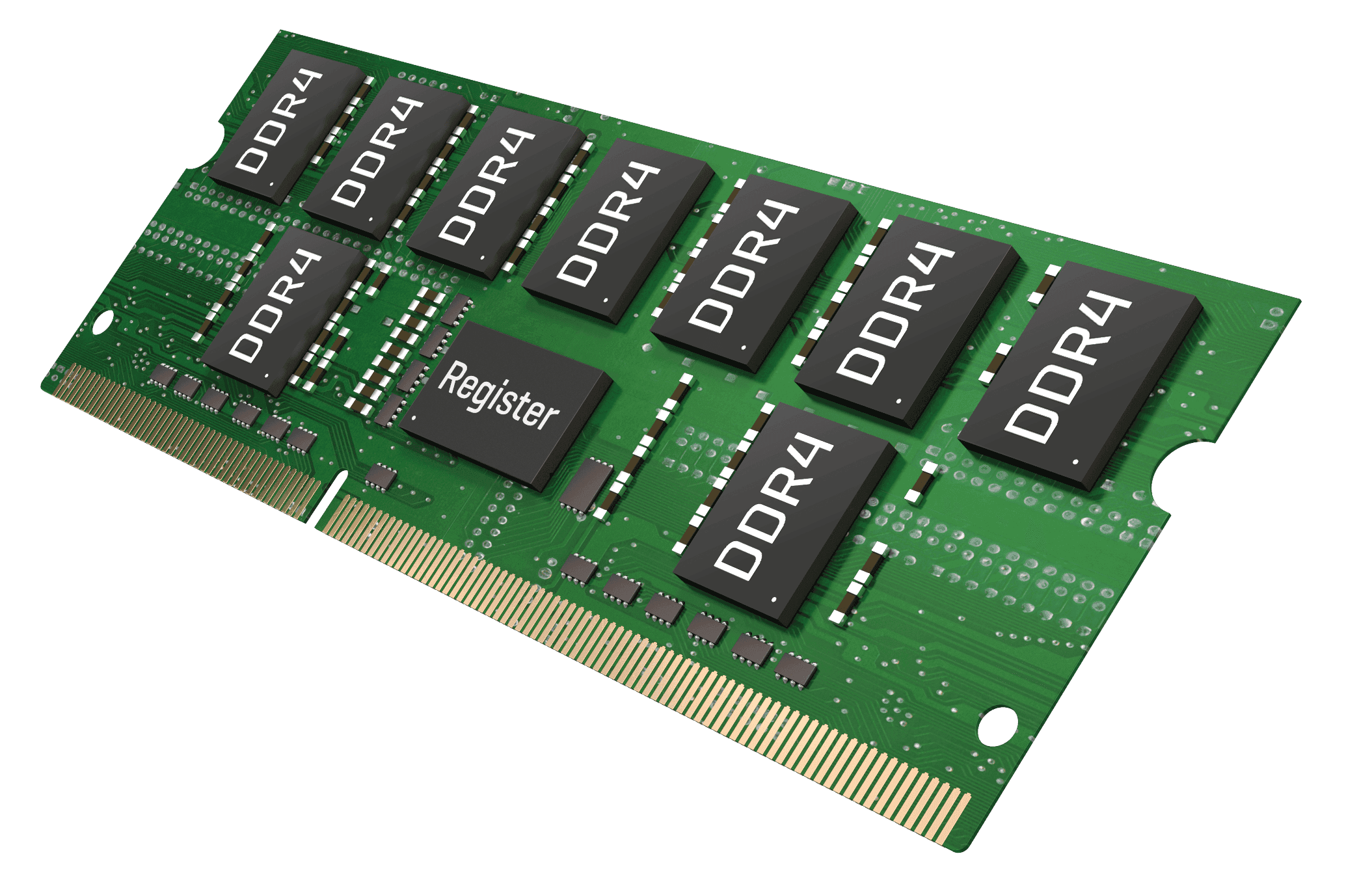







Key features:
| Form Factor | Bit-Width | PinCount | Hight Options | Organisation | Ranks | Capacity |
|---|---|---|---|---|---|---|
| SO-DIMM | x64 | 260 | Standard | x8, x16 | 1, 2 | 2-32GB |
| ECC SO-DIMM | x72 | 260 | Standard, ULP | x8, x16 | 1, 2 | 4-32GB |
| UDIMM | x64 | 288 | Standard | x8, x16 | 1, 2 | 2-32GB |
| ECC UDIMM | x72 | 288 | Standard, VLP | x8 | 1, 2 | 4-16GB |
| RDIMM | x72 | 288 | Standard, VLP | x4, x8 | 1, 2, 4 | 64GB |
| LRDIMM | x72 | 288 | Standard | x4, x8 | 2,4 | 64GB |
| Mini-UDIMM | x72 | 288 | Standard, VLP | x8 | 1, 2 | 32GB |
| Mini-RDIMM | x72 | 288 | Standard, VLP | x8 | 1, 2 | 32GB |