

We’re well into Q4, with only a couple of weeks to go until the end of the year. If you're hoping for Black Friday deals on Memory or for your Christmas technology gifts, you might be disappointed. All market signs indicate that there will be less tech under the Christmas tree this year. Because the consumer industry is hit by the same forces as the rest of the industry.
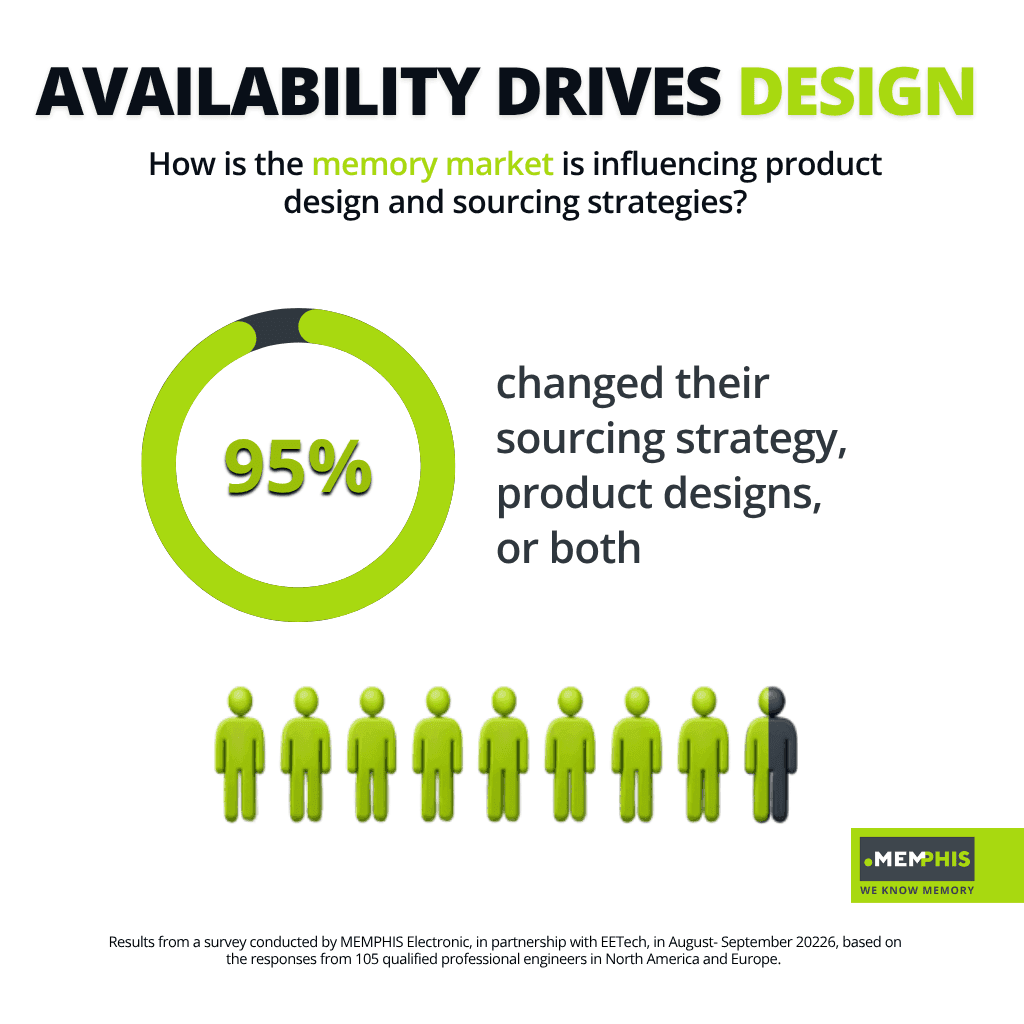
There’s no denying it anymore - the memory economy is changing electronics design and sourcing. Those are the findings from a survey among engineers actively working with memory that we commissioned. More below.
In our next webinar, we will outline the forces that are driving this next memory economy and explain why there’s no relief in sight for 2027. Still, there are strategies that help mitigate the burden of sourcing: Design for Procurement. In an article, we discussed why it’s becoming an essential engineering discipline and examined the trade-offs between modern memory technologies.
What else is new? We introduce new sourcing opportunities through our partnership with Puya Semiconductor, and you can find us at electronica 2026 in hall C5, booth 361. It’s the ideal opportunity to discuss your 2027 sourcing needs and join our 35-year anniversary celebrations. Mark your calendar for Nov 10 -13 and drop by our booth in Munich.
Engineers are increasingly choosing memory components based on availability rather than technical performance or price, according to a new survey by MEMPHIS Electronic.
The study of more than 100 engineers across North America and Europe shows that ongoing supply constraints are no longer confined to procurement teams but are now influencing product architectures, sourcing strategies, and engineering decisions across the electronics industry.

AI infrastructure, HBM, advanced packaging, and next-generation computing are creating a new memory economy alongside the traditional DRAM and NAND cycle. Where will capacity be going moving forward? How will it be allocated, and which companies will capture future value?
This 2026 Year-End webinar will provide a strategic, data-driven outlook on the forces shaping the global memory industry from 2027 through 2030.
We signed a distribution agreement with Puya Semiconductor that will bring Puya’s NOR Flash and EEPROM product families to our customers worldwide.
As NOR and EEPROM remain vital components in many Industrial and embedded applications, we are providing more options to design engineers and procurement teams. Reach out if you are interested in samples or a quote!

Design engineers have long been familiar with Design for Manufacturing and Design for Testability. Today's market conditions demand one additional discipline: Design for Procurement.
The concept is simple: Instead of adding procurement after the bill of materials is released, include procurement considerations in the design process. In a market defined by uncertainty, engineers must design for it so flexibility becomes a competitive advantage.
Smartphones, tablets, and tech gadgets in general rank high on consumers’ holiday wish lists. This year, many shoppers may be in for a surprise. Some products could become significantly more expensive, and others may be difficult to obtain.
What consumers will experience this Christmas season is something the electronics industry has already been facing for months. But what do you do when memory prices exceed a product's overall bill of materials? Will consumers still buy, or will they wait for prices to come down again?


Whether you're facing allocation risks, product discontinuations, technology transitions, or new AI-driven performance requirements, MEMPHIS helps you make informed memory decisions that support long-term success.
For 35 years, that’s what we have been doing: providing clarity, insights, and practical solutions, and this is what we are celebrating at electronica.
Stop by our booth C5.361 at this year's electronica from Nov 10 to 13 for market insights and anniversary celebrations.