
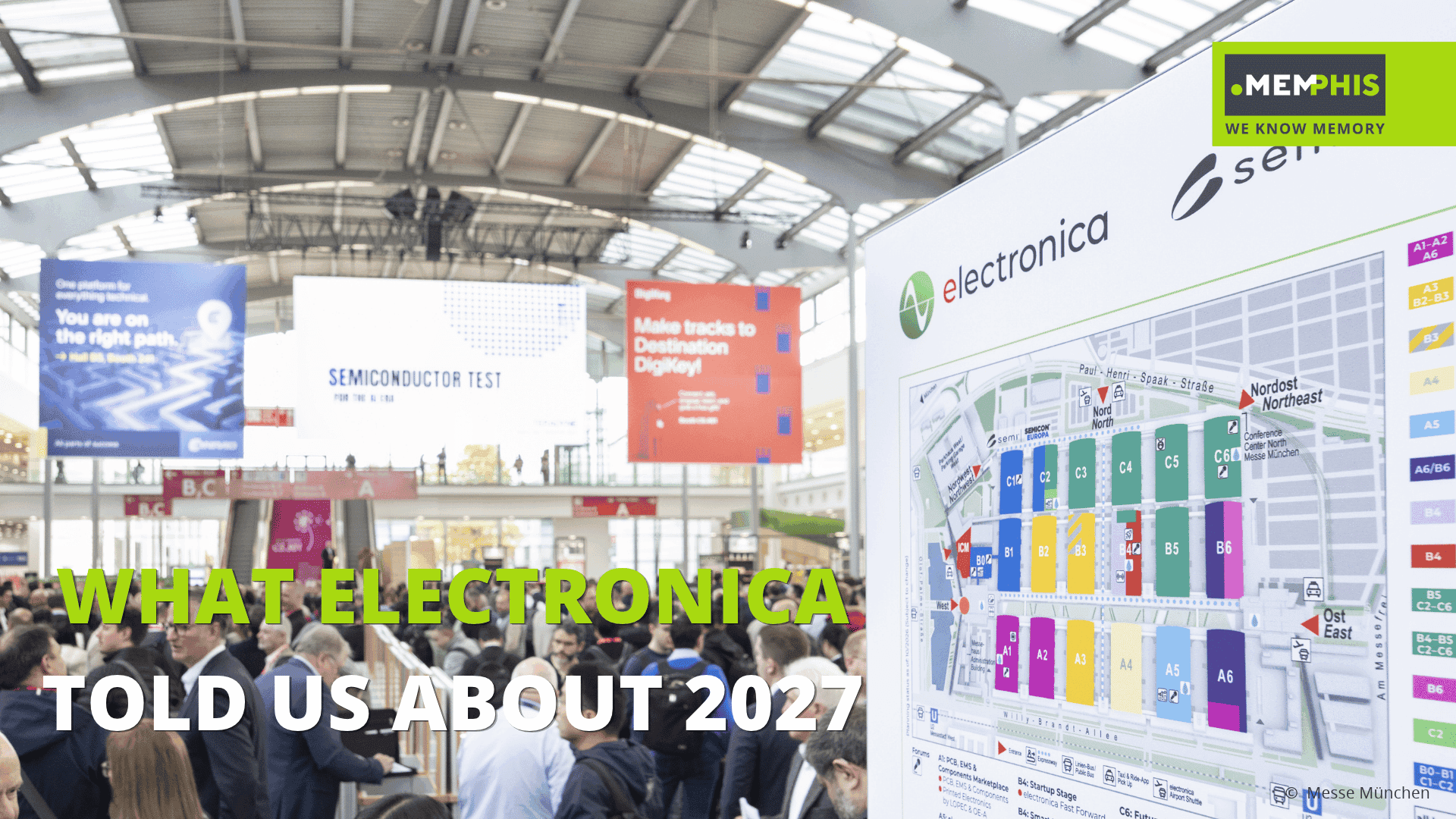
What electronica 2026 told us about 2027
Electronica 2026 closed its doors in Munich on 13 November after welcoming more than 86,000 visitors and 3,512 exhibitors, including MEMPHIS Electronic. Electronica years are always special, and this year was no exception. In the current market, the show provided an ideal opportunity to discuss memory requirements, the challenges we are all facing, and strategies for 2027 and beyond.
But even stepping away from our booth, one development stood out across the halls: artificial intelligence is leaving the data center and moving into robots, vehicles, industrial controllers, and other physical systems. As it does, memory becomes central to system architecture.
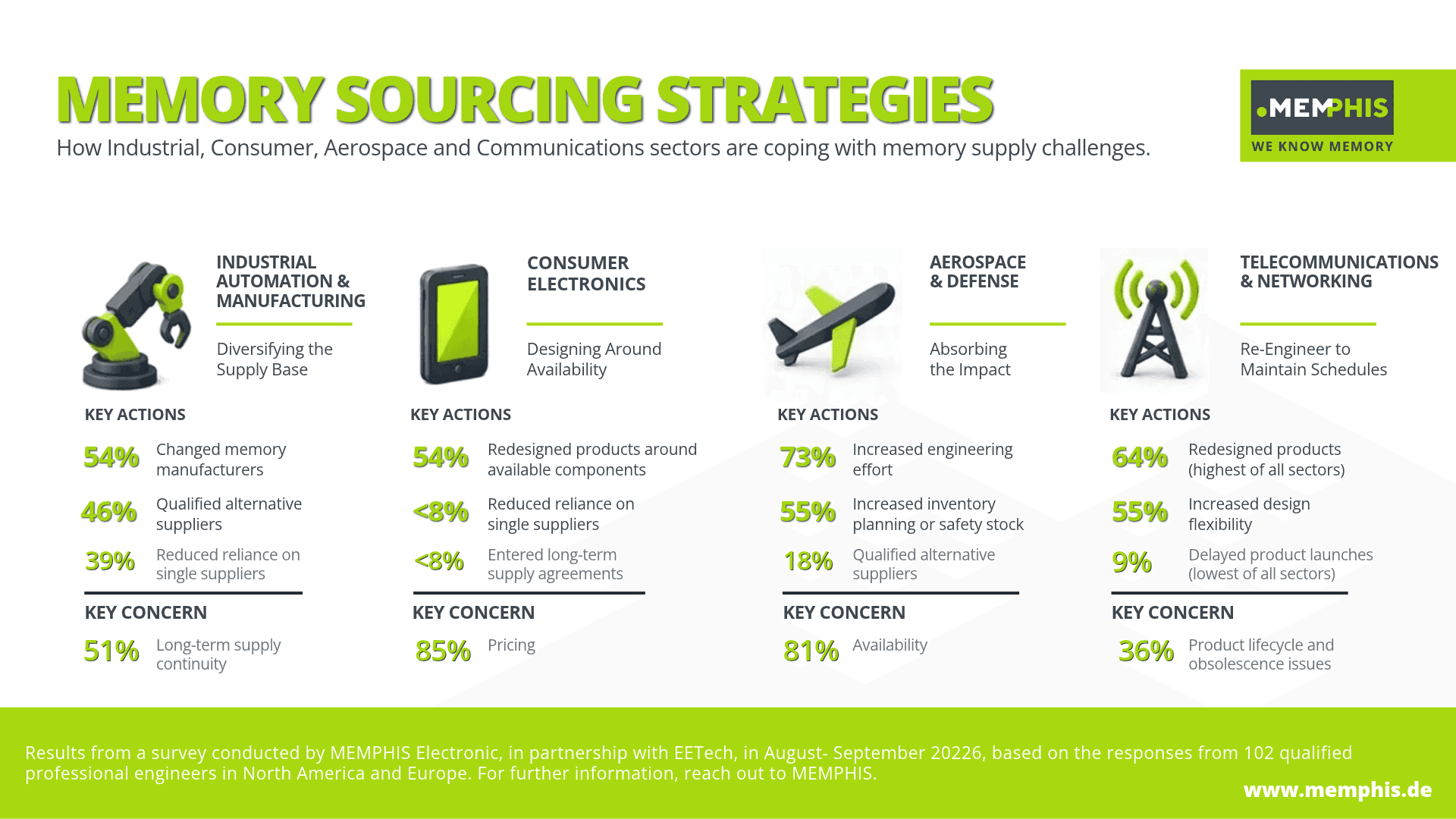
This also changes how memory is selected. Capacity and price still matter, but they are only part of the decision. This was also a core finding of our memory market survey, which revealed how different industries are reacting to the current memory crunch.
Diversification is one strategy, and we are supporting that by adding ADATA Industrial to our portfolio. But in essence, memory strategy is becoming inseparable from product strategy, so reach out to secure yours. Don’t forget to register for our webinar on Dec 10. where we will provide an outlook on 2027 and beyond.
Enjoy the read!
Industry Strategies in Memory Shortage
While engineers worldwide agree on the severity of today's memory market conditions, different sectors are adopting notably different strategies to cope with ongoing supply challenges. These are the findings of our recent memory market survey.
Industrial and Manufacturing companies have focused on supplier diversification, consumer electronics companies are designing around costs and availability, and telecommunications companies are re-designing.

Market Outlook 2027 and beyond
AI infrastructure, HBM, advanced packaging, and next-generation computing are creating a new memory economy alongside the traditional DRAM and NAND cycle. Where will capacity be going moving forward? How will it be allocated, and which companies will capture future value?
This 2026 Year-End webinar will provide a strategic, data-driven outlook on the forces shaping the global memory industry through 2030. We are offering two sessions on December 10.
New addition to our Linecard: ADATA
We have added ADATA Industrial, one of the world’s leading manufacturers of DRAM modules, SSDs and embedded storage products, to our supplier portfolio. ADATA's manufacturing footprint spans Taiwan, China, India, and South America, giving customers greater freedom to align sourcing decisions with country-of-origin requirements, and regional manufacturing preferences.
The new partnership further strengthens our ability to support long-term availability, second-source strategies, and supply chain resilience for a broad range of industrial-grade memory and storage solutions.

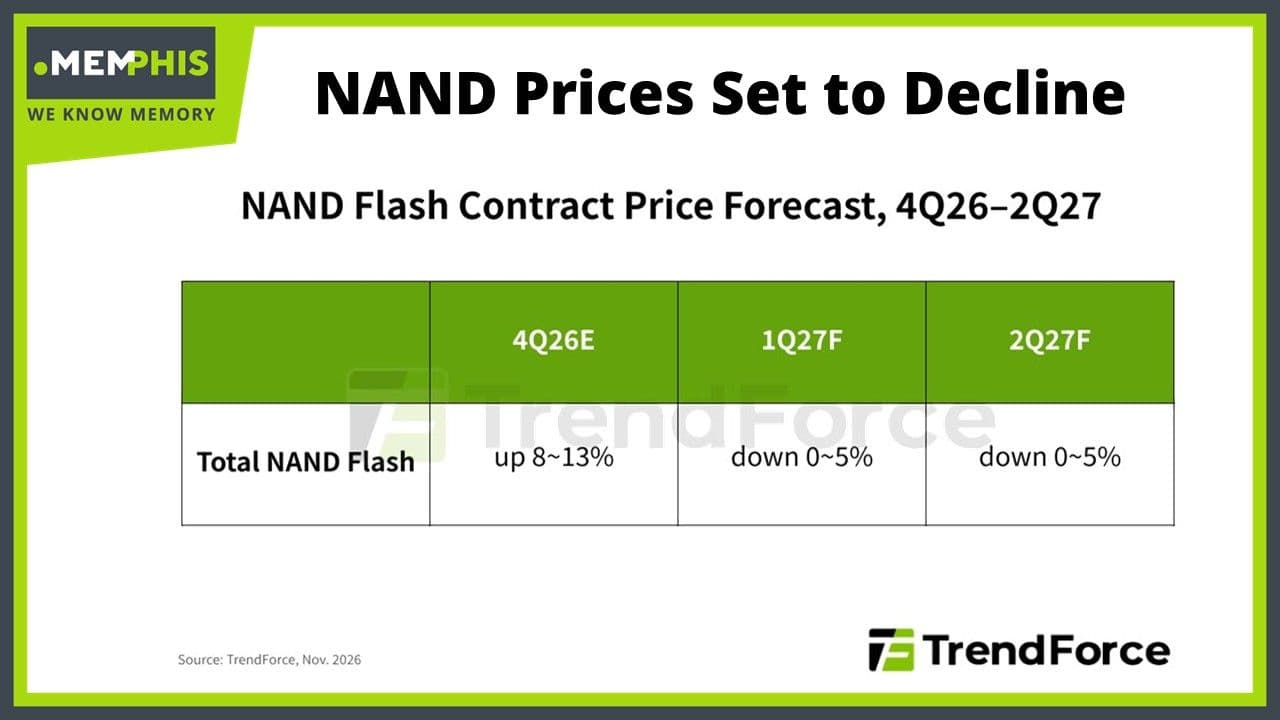
NAND Flash Prices Set to Decline in 2027
TrendForce’s latest memory industry research indicates that the global NAND Flash market is expected to see a reversal in supply-demand dynamics in 2027. With supply set to grow rapidly, substantial cuts to enterprise SSD orders from Chinese CSPs—coupled with a potential further contraction in consumer electronics demand—are expected to exacerbate oversupply.
Keep in mind that this is valid for consumer-grade NAND flash.
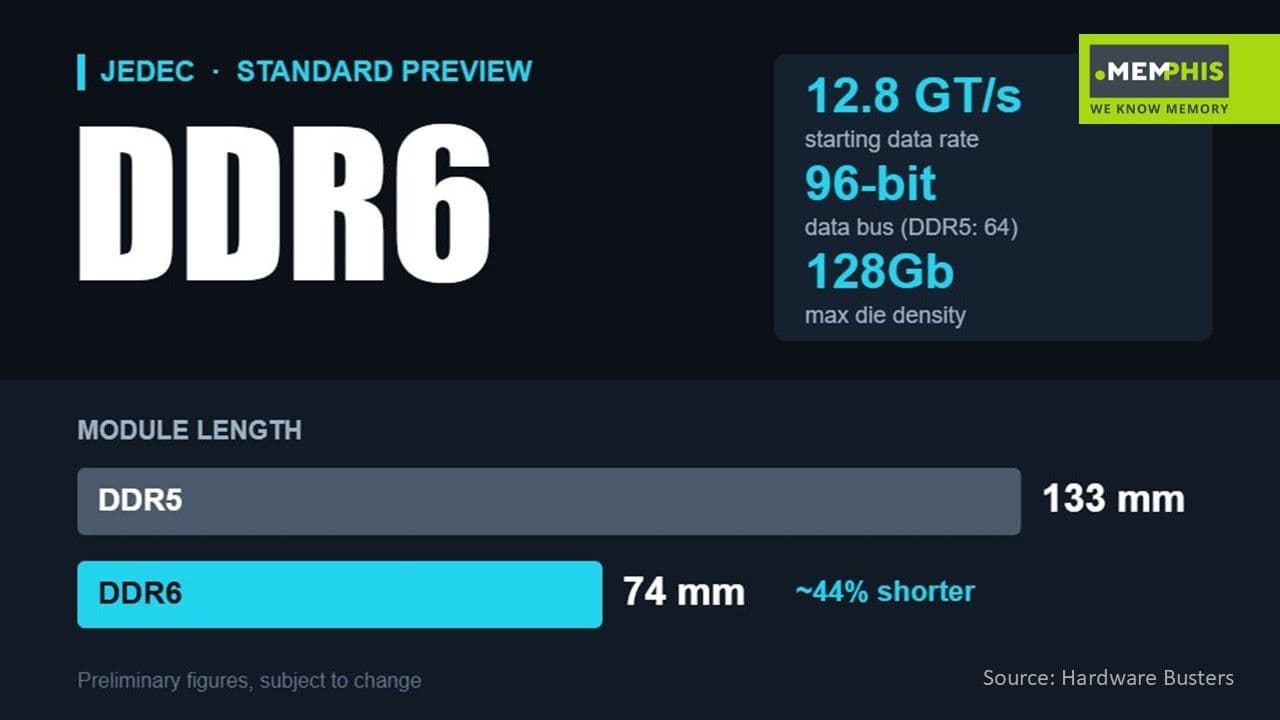
JEDEC Previews Preliminary DDR6 Specs
JEDEC has previewed the new DDR6 architecture that is expected to deliver significant gains in bandwidth, capacity and power efficiency. Specifically, DDR6 RDIMMs will start with a data rate of 12.8 GT/s, up from DDR5’s 9.2 GT/s, with a roadmap extending to 14.4 GT/s and beyond. The data bus expands from 64 to 96 data lines, representing a 50% increase.
Major memory manufacturers are working with substrate suppliers based on the initial specs and plan to switch their DDR4 / LPDDR4 lines to DDR6.

Vienna Calling! Join us at Evertiq expo
Y2027 kicks off with an event for us. We will participate in the first Evertiq Vienna on January 28. As part of the conference program, our Nikolaos Florous, Global Head of Product Marketing, will present insights into the memory market, the pricing dynamics, and strategies for navigating the supply crunch.
It’s the first opportunity in 2027 to hear updated predictions and valuable market insights. Participation is free, so register today.