
The new year began just like the old year closed: with a memory market that shows no signs of slowing down.
2026, we are facing a shortage in both DRAM and NAND in unprecedented harshness. The unusual thing about it is that it’s a shortage across all memory generations – legacy and new nodes, and it not only feels as if it’s lasting longer. Analysts and industry experts agree that we won’t see signs of easing before the end of the year. So we haven’t reached the peak yet.
What can you do about it? Careful and accurate planning has never been more important. Without realistic assessments of demand, supply, and lead times, OEMs will struggle to keep their products running off the factory floor.
In times like these, a reliable partner can make all the difference. We’re here to help you make confident, future-proof sourcing decisions.
Enjoy the read and reach out with any questions you might have.
The current semiconductor super-cycle reflects the convergence of two powerful forces: structurally elevated demand driven by AI, and a supply base that is deliberately constrained by capital discipline, node transitions, and geopolitical risk management.
This combination is producing a more prolonged and less volatile upcycle than in previous boom–bust periods. In this article, Marco Mezger outlined the most important trends and what they mean for you.
Read more here.


There’s no denying the truth: The memory market’s current super-cycle is expected to continue at least through 2026. It is driven by robust demand from AI servers, HBM (High Bandwidth Memory), and DDR5 migration.
In our last webinar, we took an honest look at the good, the bad, and the ugly in the memory market. We explain the background behind the current supply tightness and why this will persist until late 2026.
Missed the live event? Then you can watch the recording here.
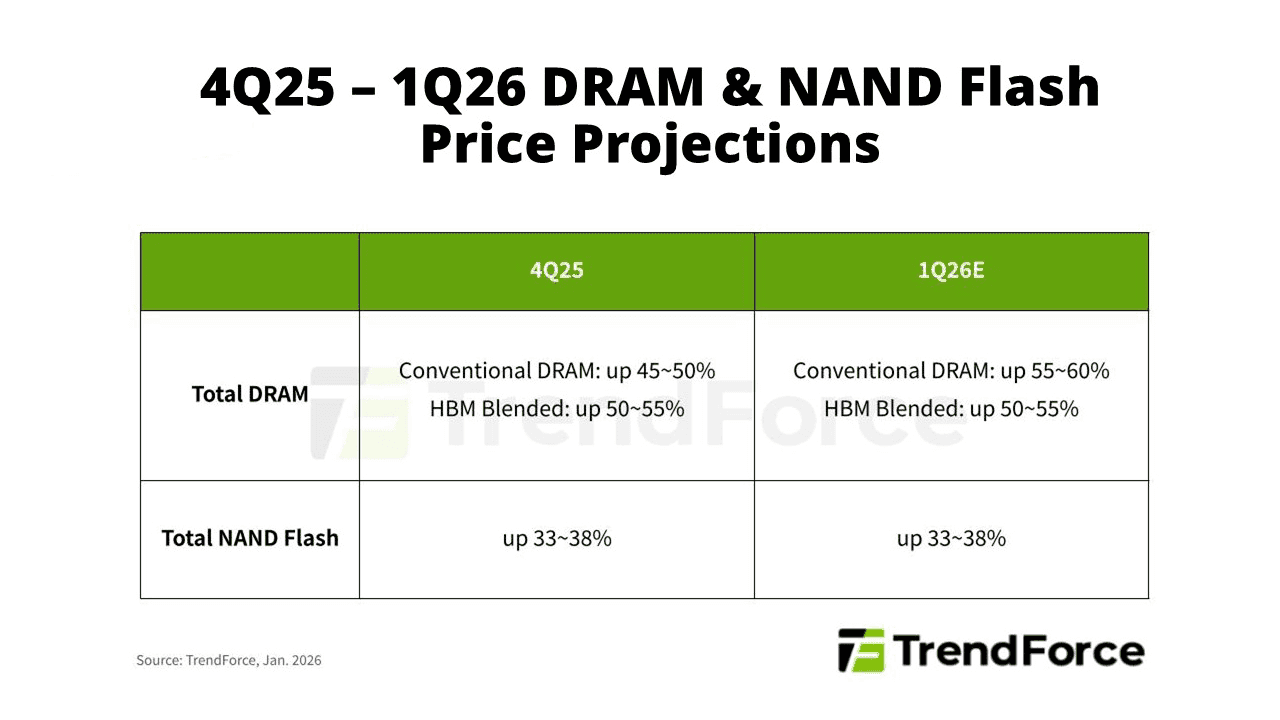
According to TrendForce, DRAM suppliers will continue to reallocate advanced process nodes and new capacity toward server and HBM products in 1Q26 to support rising AI server demand.
This means that conventional DRAM contract prices in 1Q26 are forecast to rise 55–60% QoQ, while NAND Flash prices are expected to increase 33–38% QoQ. Also, NAND Flash demand is increasingly polarized between consumer and AI applications, with enterprise SSDs prioritized, client SSDs are forecasted to rise by over 40%.
Read more here.
Any questions on memory sourcing? Reach out!
Even as major DRAM manufacturers phase out DDR3, demand in industrial and embedded systems remains strong. That’s why MEMPHIS continues to offer a broad portfolio of DDR3 components across densities, organizations, and temperature grades.
We combine long term availability with independent guidance, helping you select the right parts and qualified second sources so your products stay in production without surprises.
With 30+ years of memory expertise, we make sure your DDR3-based designs stay supported.
Find out more here.
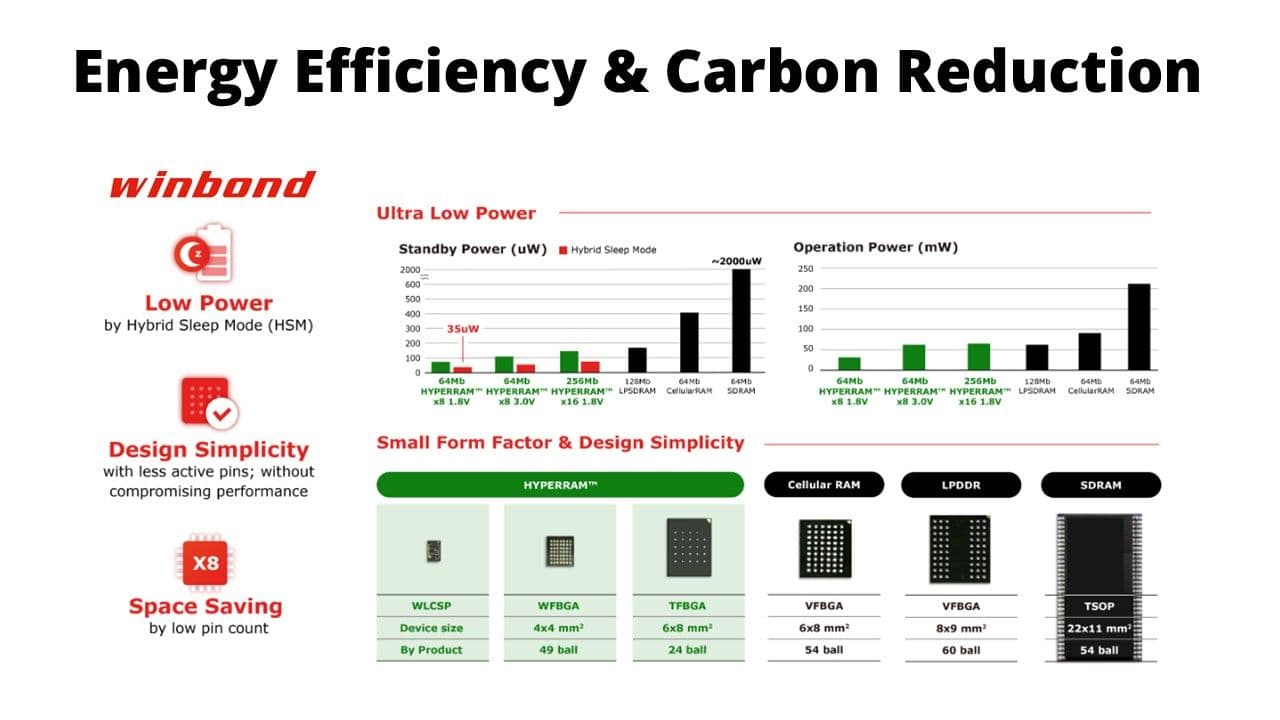
In a world where sustainability is no longer optional, innovation and environmental responsibility must go hand in hand. Our partner, Winbond, reminds us that energy-efficient and carbon-reducing products do not necessarily have to be disruptive innovations.
Continuous innovation in circuit design, process technology, materials, and packaging contributes to energy savings and reduced emissions. Winbond has highlighted some examples of how it follows just this path.
Read more here.
MEMPHIS Electronic GmbH
Basler Str. 5
61352 Bad Homburg
Germany
Phone: +49 6172 90350
Email: info@memphis.de

New Year, new trade show calendar. Despite – or maybe just because of – the challenging market conditions, now is the time to speak with us!
Mark your calendar for these events. For embedded world you can already plan your visit now.
You can find your ticket code here.